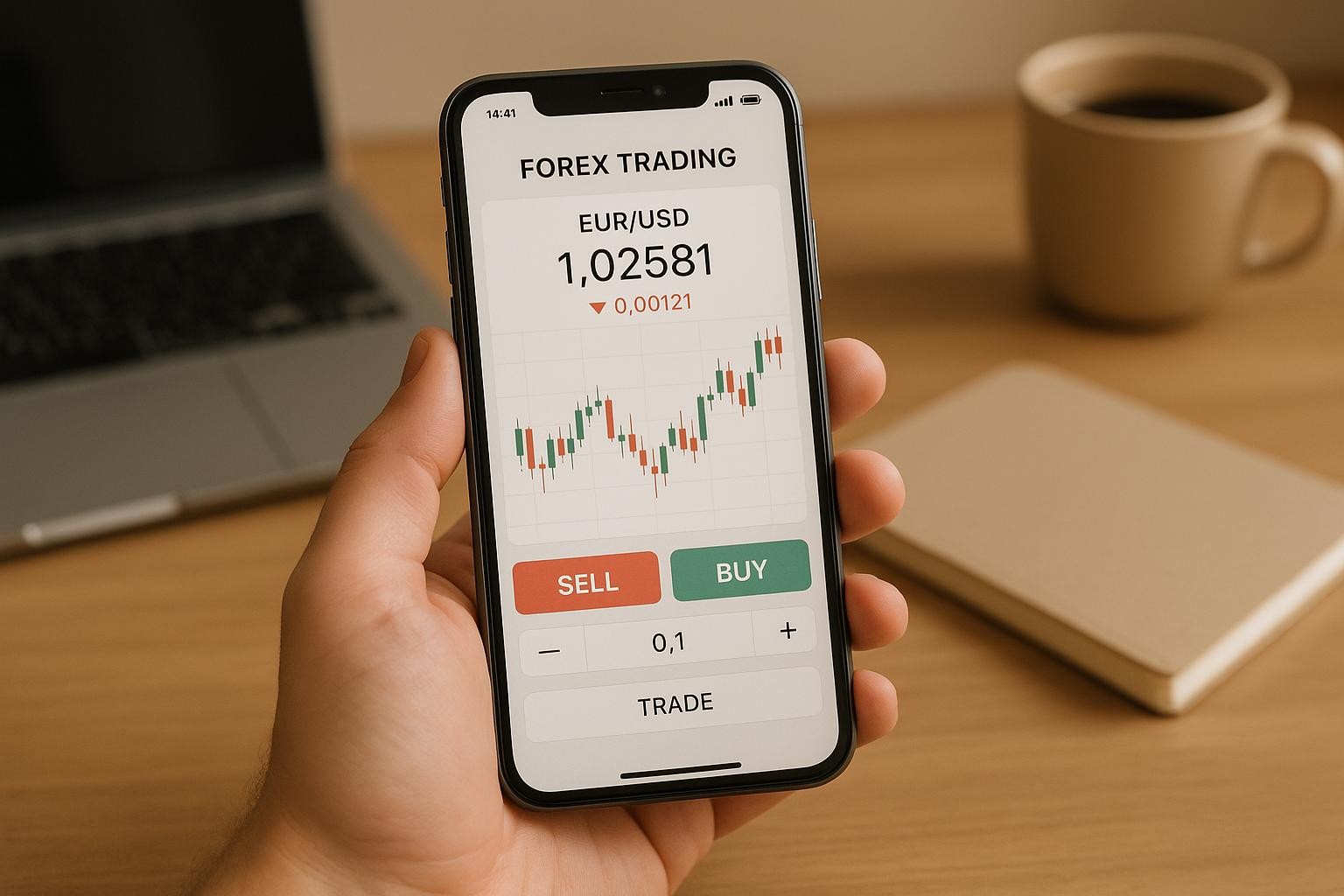
A Low Investment Trading App can make market participation more accessible for beginners who want to start with a smaller amount of capital. Lower starting capital can reduce the financial pressure of learning, but it does not remove market risk or the need for careful planning.
Beginners should focus first on understanding account structure, charges, order types, risk limits and the difference between investing and active trading. Starting small can be useful when it is combined with a clear learning process rather than frequent speculative activity.
1. Define Why You Want to Start Trading
Before opening a position, beginners should decide what they expect from the market. Some users may be interested in long-term investing, while others may want to understand short-term trading.
These approaches require different time commitments, risk controls and decision-making styles. A beginner who does not distinguish between them may enter a short-term trade and later hold it as a long-term investment simply because the price moved against them.
Having a clear purpose helps determine how the app should be used.
2. Decide How Much Capital You Can Afford to Risk
Starting with a lower amount does not mean every rupee should be placed into the market immediately. Users should decide how much capital can be exposed without affecting rent, bills, emergency savings or other essential financial goals.
A small trading allocation can help beginners learn how orders, market movement and portfolio fluctuations work. It can also reduce emotional pressure compared with starting with an amount that feels financially significant.
Capital used for trading should ideally remain separate from money needed for everyday expenses.
3. Understand the Difference Between Investing and Trading
Investing generally focuses on longer-term ownership, while trading often involves shorter holding periods and more frequent decisions. Beginners should understand which approach they are following before placing an order.
Long-term investors may focus more on business quality, valuation and financial goals. Traders may pay greater attention to entry levels, price movement and predefined exits.
A Low Investment Trading App may support both activities, but the user should maintain separate rules for each.
4. Learn the Account Structure
Market access often involves different account components. A trading account is generally used to place buy and sell orders, while a Demat account can hold eligible securities electronically.
Understanding this structure helps beginners make sense of their holdings, transactions and settlement records.
Users should also review which bank account is linked for fund transfers and ensure that the registered details are correct.
5. Review Charges Before Trading Frequently
Lower capital can make costs more noticeable. Even small charges can have a meaningful impact when the value of each transaction is limited.
Beginners should review the applicable fee structure before increasing their activity. Depending on the platform and transaction type, costs may include brokerage, account-related charges, depository charges and statutory levies.
The important question is not whether one advertised fee is low, but what the total cost of using the account may be.
6. Start With Simple Market Orders You Understand
Beginners can become confused by the number of order types available on some platforms. It is better to understand a few basic order functions properly than to use advanced features without knowing how they behave.
Before confirming an order, users should check the security, quantity, price and order type.
The confirmation screen should be treated as a final verification step rather than something to skip quickly.
7. Keep the First Few Positions Small
Early market activity should be treated as a learning period. Smaller positions can help users understand how they respond emotionally when prices rise or fall.
A beginner may discover that even a modest loss feels uncomfortable. That information is useful because it helps reveal the trader’s actual risk tolerance.
Increasing position size should come only after the user understands both the market process and their own behaviour.
8. Use a Demat Setup to Keep Holdings Organised
A Demat setup can help users hold eligible securities electronically and monitor ownership through a digital account structure.
Beginners should periodically review their holdings and transaction records to confirm that purchases and sales have been reflected correctly. Keeping records organised also makes it easier to distinguish between long-term holdings and short-term positions.
Digital convenience is useful when it improves visibility and account management rather than encouraging unnecessary trading.
9. Build a Basic Risk Rule
Every trade should have a predefined maximum loss. Beginners should decide this before entering rather than trying to calculate it after the market moves against them.
A basic risk rule may include the maximum amount allowed per trade and the maximum total loss acceptable in one day or week.
The exact numbers depend on individual capital and comfort, but the principle remains the same: one position should not be allowed to damage the entire account.
10. Avoid Using the Full Balance at Once
Using the entire available balance in one position creates concentration risk. If that trade performs poorly, there may be little flexibility left to manage the account.
Keeping part of the capital unused can provide room for future opportunities and reduce pressure during market volatility.
Beginners may also find it easier to learn when they are not emotionally dependent on the result of one position.
11. Use Watchlists Before Taking Action
A watchlist allows users to track securities without immediately buying them. This can be useful for beginners who want to observe price behaviour and learn how different stocks react to market conditions.
Users can create separate watchlists based on sectors, long-term ideas or potential short-term setups.
Observation is an important part of learning, and not every security added to a watchlist needs to become a trade.
12. Do Not Chase Sudden Market Moves
Sharp price moves can create fear of missing out. Beginners may enter after the price has already moved significantly because they believe the opportunity will disappear.
This can result in poor entry levels and weaker risk-reward conditions.
If the planned opportunity has already passed, waiting for another setup is often more disciplined than entering late.
13. Track Every Trade
A trading journal can help beginners understand whether their decisions are improving. The record should include more than profit or loss.
Useful details may include the entry reason, price, position size, planned exit, actual exit and lesson from the trade.
After several weeks, the journal may reveal patterns such as repeated late entries, excessive position sizes or better performance in certain types of setups.
14. Learn From Losing Trades Without Chasing Recovery
Losses are unavoidable in market activity. The important question is whether the loss occurred within the planned risk limit.
Trying to recover money immediately can lead to emotional trading and larger positions. A better approach is to review the trade and determine whether the process was followed.
If the original plan was respected, the loss may simply be part of normal market uncertainty.
15. Avoid Overtrading Because the App Is Convenient
Mobile access can make it possible to place trades throughout the day. That convenience can also encourage unnecessary transactions.
Beginners should not interpret constant market access as a reason to keep trading. A trade should be taken only when the planned conditions are present.
Fewer well-considered decisions can be more useful for learning than frequent impulsive activity.
16. Review App Security and Account Access
A trading app contains sensitive financial information, so account security should remain a priority. Users should keep passwords and authentication details private and avoid sharing OTPs with anyone.
Apps should be downloaded only from official sources. Users should also verify support contacts before discussing account issues.
Basic digital security habits are essential regardless of how small the trading capital may be.
17. Check Whether Research Tools Are Useful
Some apps provide market data, screeners, charts and company information. Beginners should use these features to support learning rather than rely on them as automatic trading signals.
A stock appearing in a trending list does not automatically make it suitable for purchase.
Research tools are most useful when users understand what the information means and how it connects to their own strategy.
18. Increase Capital Slowly
If a beginner becomes more comfortable with the market, capital can be reviewed gradually rather than increased sharply after a few profitable trades.
Short-term success can create overconfidence. Increasing exposure too quickly may turn a manageable loss into a much larger one.
Capital should grow only when the user’s process, risk discipline and financial capacity justify the change.
19. Review Progress Monthly
A monthly review can help beginners evaluate more than returns. Users can check whether they followed their risk rules, avoided unnecessary trades and improved their understanding of the market.
The review may also reveal whether the chosen style actually fits the user’s available time and risk tolerance.
Progress should be measured through better decision-making as well as account performance.
Conclusion
A Low Investment Trading App can provide beginners with a practical way to learn market processes while starting with a smaller amount of capital. The most useful approach is to keep position sizes controlled, understand charges, maintain clear risk rules and avoid treating easy market access as a reason to trade constantly.
Users who later explore Option Trading should treat it as a separate and more complex activity because derivatives involve additional factors such as leverage, expiry and premium behaviour. Starting small, learning gradually and protecting capital can create a stronger foundation for future market participation.
FAQs
1. Is a Low Investment Trading App Suitable for Beginners?
Yes, it can be useful for beginners who start with manageable capital and understand the risks before trading.
2. How Much Money Should a Beginner Start With?
The amount should be small enough that a loss would not affect essential expenses, savings or financial stability.
3. Should Beginners Trade Every Day?
No, beginners should trade only when a setup matches their plan rather than feeling pressured to transact daily.
4. Why Is Position Size Important for New Traders?
Smaller position sizes help control losses and reduce emotional pressure while the user is still learning.
5. Can Starting With Less Money Remove Trading Risk?
No, lower capital may limit the amount exposed, but market losses and trading risks still remain.
About the Author